

Top 3 Post-Run Stretches Every Runner Should Do for Faster Recovery
Post-run recovery is just as important as the run itself. Whether you’re training for an event or heading out for a casual jog, running places repetitive load through the hips, legs, and lower back. Without proper recovery, tightness can build up, affecting your movement, performance, and comfort over time.
One of the simplest and most effective ways to support recovery after a run is stretching. Below are three go-to stretches we regularly recommend to runners to help reduce post-run stiffness, improve flexibility, and support healthy movement.
Stretch 1: Hip Flexor Stretch
The hip flexors work hard when running, especially if you spend a lot of time sitting during the day. Tight hip flexors can affect stride length, posture, and even contribute to lower back discomfort, making this an essential post-run stretch.
To perform this stretch, come into a lunge position with both legs bent at roughly 90 degrees. Keep your chest tall and gently bring your arms up overhead. Slowly push your pelvis forward while keeping your core engaged. You should feel a stretch through the front of the hip on the leg that is positioned behind you.
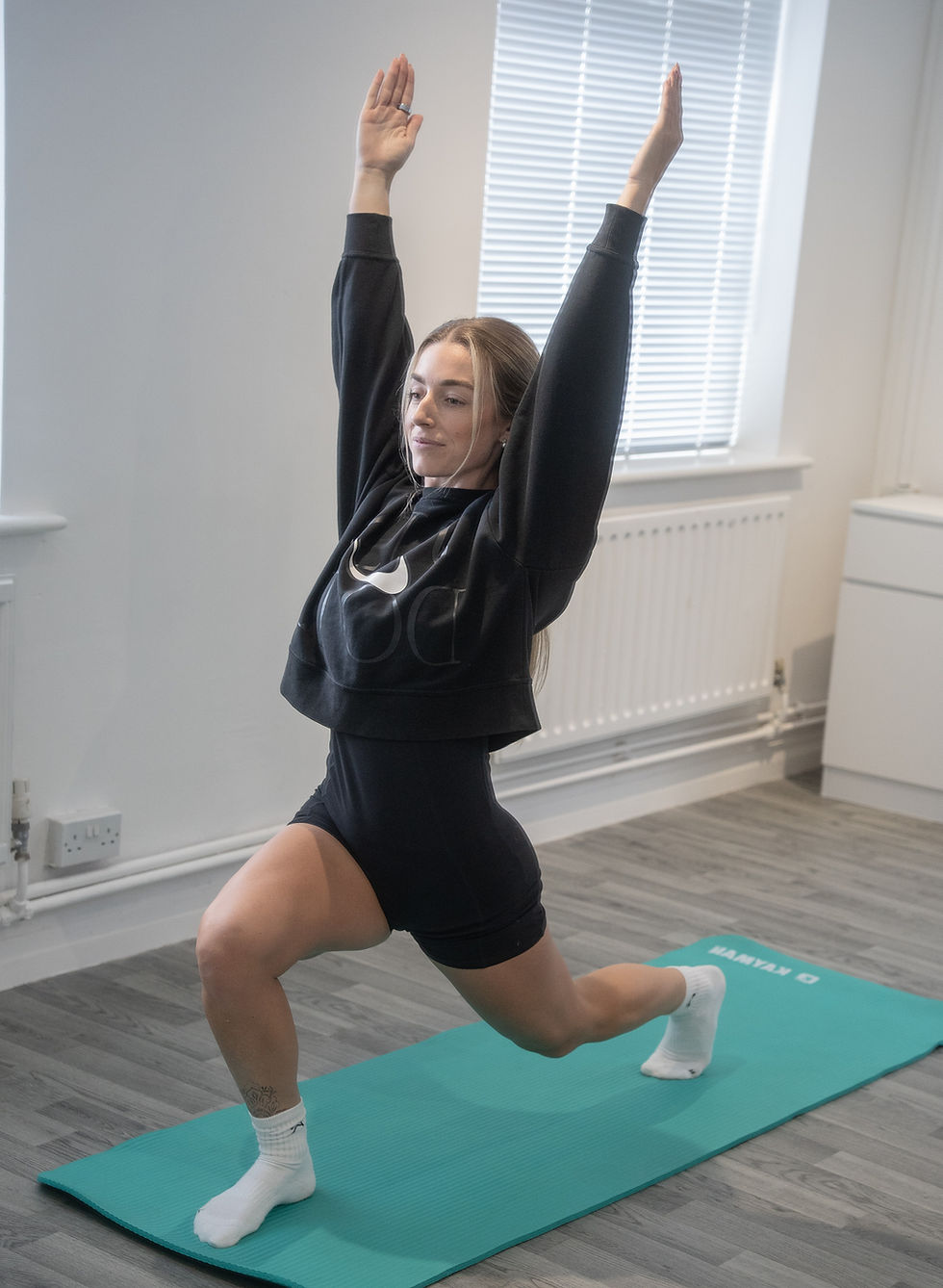
Hold this stretch for around 30 seconds, breathing steadily, then switch sides. Focus on control rather than forcing the stretch.
This position helps restore hip extension, supports better running posture, and can ease tightness that builds up through repeated strides.
Stretch 2: Calf Release Using a Foam Roller
The calf muscles work hard during running, absorbing force with every stride. When they become tight, ankle movement can be restricted, which may affect running efficiency and increase strain through the lower leg. Using a foam roller is an effective way to release tension and improve circulation through the calves after a run.
To perform this release, sit on the floor with your legs extended in front of you. Place the foam roller underneath one calf, resting your hands on the floor behind you for support. Lift your hips slightly and slowly roll the calf over the foam roller, moving from just above the ankle up toward the back of the knee.

If you find a particularly tight or tender area, pause and take a few slow breaths before continuing. You can increase pressure by crossing the other leg over the one being worked. Spend around 30 seconds on each calf, keeping movements slow and controlled.
Foam rolling the calves after a run helps reduce muscle tightness, supports better ankle mobility, and may aid recovery by encouraging blood flow to the area.
Stretch 3: Glute Stretch
The glute muscles play a key role in stabilising the pelvis and driving power during running. When they become tight, they can restrict hip movement and place additional strain on surrounding muscles and joints.
To stretch the glutes, sit on the floor with both legs extended in front of you. Bend one knee and cross that leg over the opposite leg, placing your foot flat on the floor. Gently hug the bent knee toward your chest, keeping your spine tall.

Hold for 30 seconds, then repeat on the other side. This stretch helps release tension through the hips and lower back and can be particularly beneficial if you experience stiffness after longer or harder runs.
Why Post-Run Stretching Matters
Stretching after running isn’t about forcing flexibility - it’s about supporting healthy recovery. Taking just a few minutes after each run to stretch key muscle groups can help reduce soreness, improve circulation, and maintain joint mobility. Over time, this can contribute to improved performance and a reduced risk of injury.
Consistency is key. Even short recovery routines performed regularly can make a noticeable difference in how your body feels and moves.
If you’re experiencing ongoing tightness, discomfort, or recurring running-related issues, additional support may be helpful. At LMH Optimal Therapy, our team works with runners of all levels to assess movement, address restrictions, and support long-term performance through chiropractic care and sports therapy.
Looking after your recovery helps you enjoy your runs more - and keeps your body moving well for the long term.


Comments